Research
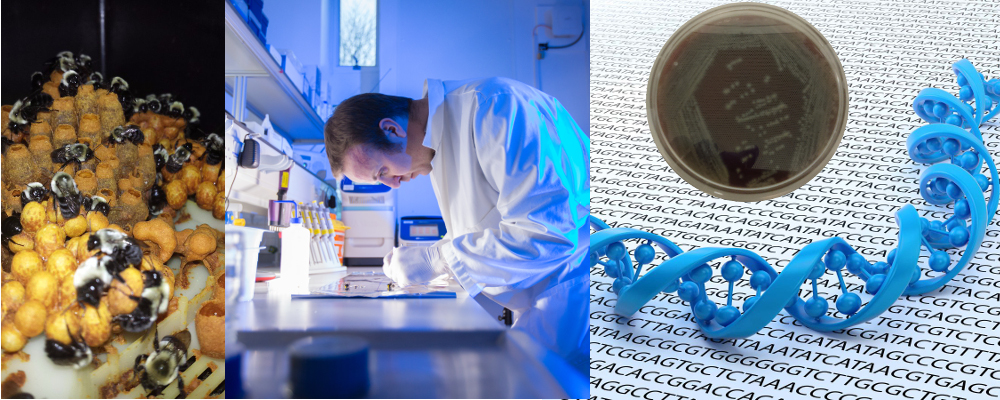
We study how microbial communities shape the health, behaviour, and resilience of their hosts, with a particular focus on pollinators and plants in agricultural ecosystems. Our research spans microbial ecology, host–microbe interactions, and microbiome engineering, with applications in sustainable agriculture, disease resistance, and conservation.
Based in the Department of Life Sciences at Imperial College London, the Graystock Lab is strategically positioned at the interface of microbiome science and agritech. We combine experimental microbiology, ecological modelling, and fieldwork to address pressing challenges in food security, pollinator health, and microbial transmission.
Research Themes
Microbial Transmission Dynamics
We investigate how beneficial and parasitic microbes establish and spread within host populations. These early transmission events are critical to host health and ecosystem stability. Our work has informed pollinator import screening, land management strategies, and agricultural policy.
Microbiome Engineering
We explore how microbial communities can be reshaped to improve host resilience. Current projects include engineering soil microbiomes to protect crops from fungal pathogens and developing probiotic interventions to help pollinators tolerate pesticide exposure.
Gut–Brain Axis in Pollinators
We are developing novel tools to study how the microbiome influences neural and behavioural responses in bees. This includes germ-free rearing, microbiome manipulation, and machine learning-based behavioural tracking.
Current Projects
Our research is currently focused on several key areas:
- Pathogen Spillover Between Pollinator Populations
We are investigating how pathogens move between managed and wild pollinators, with the goal of understanding transmission dynamics and informing conservation and biosecurity strategies. - Engineering Microbiomes for Resilience
We are developing microbiome-based interventions to enhance host resistance to environmental stressors, including pesticides and pathogens, in both pollinators and crops. - Microbial Biobank Development
We are building a growing biobank of microbial isolates from a wide range of insect hosts and environments. This resource is being used to explore microbial function, host specificity, and potential applications in sustainable agriculture and ecosystem health
Collaborations and Impact
We work closely with partners including CABI, the Bumblebee Conservation Trust, Natural England, and industry stakeholders to ensure our research translates into real-world impact. Our findings have influenced UK policy on pollinator imports, contributed to national microbiome strategy discussions, and supported international efforts in sustainable agriculture.